written by Sonder Studio
When you choose to get married in Korea, you’re not just celebrating your love in a new place. You’re stepping into a wedding culture layered with symbolism, traditions, and a quiet kind of beauty that’s felt in the details. From the Paebaek ceremony to the elegance of traditional Hanbok attire, to the vibrant energy of a Samulnori performance, these rituals have been passed down through generations—each one holding its own story and intention.
In a modern setting, however, you don’t have to follow every wedding tradition exactly as it once was. Couples today are respectfully choosing what aspects resonate, feel like them, and fit their vision for the day. The result ends up being a beautiful blend of culture and personality that makes for a beautiful and unique celebration.
Having lived in Korea for over a decade as a permanent resident, I’ve come to understand these traditions beyond just how they look, but what they truly mean. In this guide, I’ll walk you through some of the most meaningful Korean wedding traditions, how to incorporate them in a way that feels honest, and a few common mistakes to avoid along the way.
An Overview of This Korea Wedding Traditions Guide
- Korean Wedding Traditions at a Glance
- What are the Most Common Korean Wedding Traditions?
- How to Include Korean Wedding Traditions in a Modern Wedding
- How You Can Elevate Korean Wedding Traditions
- When and Where Korean Wedding Traditions Fit Into Your Wedding Day
- Common Mistakes to Avoid When Including Korean Traditions
- Do You Need a Planner or Photographer Familiar with Korean Traditions?
- Frequently Asked Questions About Korean Wedding Traditions
Korean Wedding Traditions at a Glance
Common Korean Wedding Traditions
- Paebaek ceremony: A quiet, meaningful ritual honoring elders and the joining of two families.
- Hanbok: Traditional attire that brings heritage and elegance into the day.
- Samulnori: Traditional percussion music that adds layers of meaning and energy.
Timing of Korean Wedding Traditions
- Before the ceremony: The bridal waiting area offers a gentle, informal moment for guests to meet the bride, while Samulnori fills the space with rhythm and quiet anticipation.
- During the ceremony: Intentional gestures, like deep bows and symbolic rituals, reflect both respect and the joining of two families in a way that feels grounded and deeply considered.
- After the ceremony: The Paebaek unfolds in a more intimate, family-centered setting, where the focus shifts to connection, tradition, and honoring those closest to you.
What Are Korean Wedding Traditions (and Do You Need to Include Them)?
In Korea, wedding traditions are rooted in something deeply human. They honor family, show respect to elders, and celebrate the joining of two families. There’s a quiet depth to them, shaped by generations of couples who have come before, each adding their own layer to the story. It’s less about performance and more about presence and the meaning carried forward through time.
Still, there’s also space to soften the edges. You don’t need to hold tightly to customs that feel outdated or misaligned with your own values. Instead, you get to decide what stays, what evolves, and what simply doesn’t belong in your story.
And coming from overseas doesn’t place you outside of these traditions—it actually opens a really beautiful door. If something resonates with you or feels like it belongs in your day, you’re more than welcome to include it. Not only can it make your wedding feel more intentional, but it also becomes a gentle way of experiencing Korean culture in a more personal, connected way.
What are the Most Common Korean Wedding Traditions?
Pre-Wedding Photographs
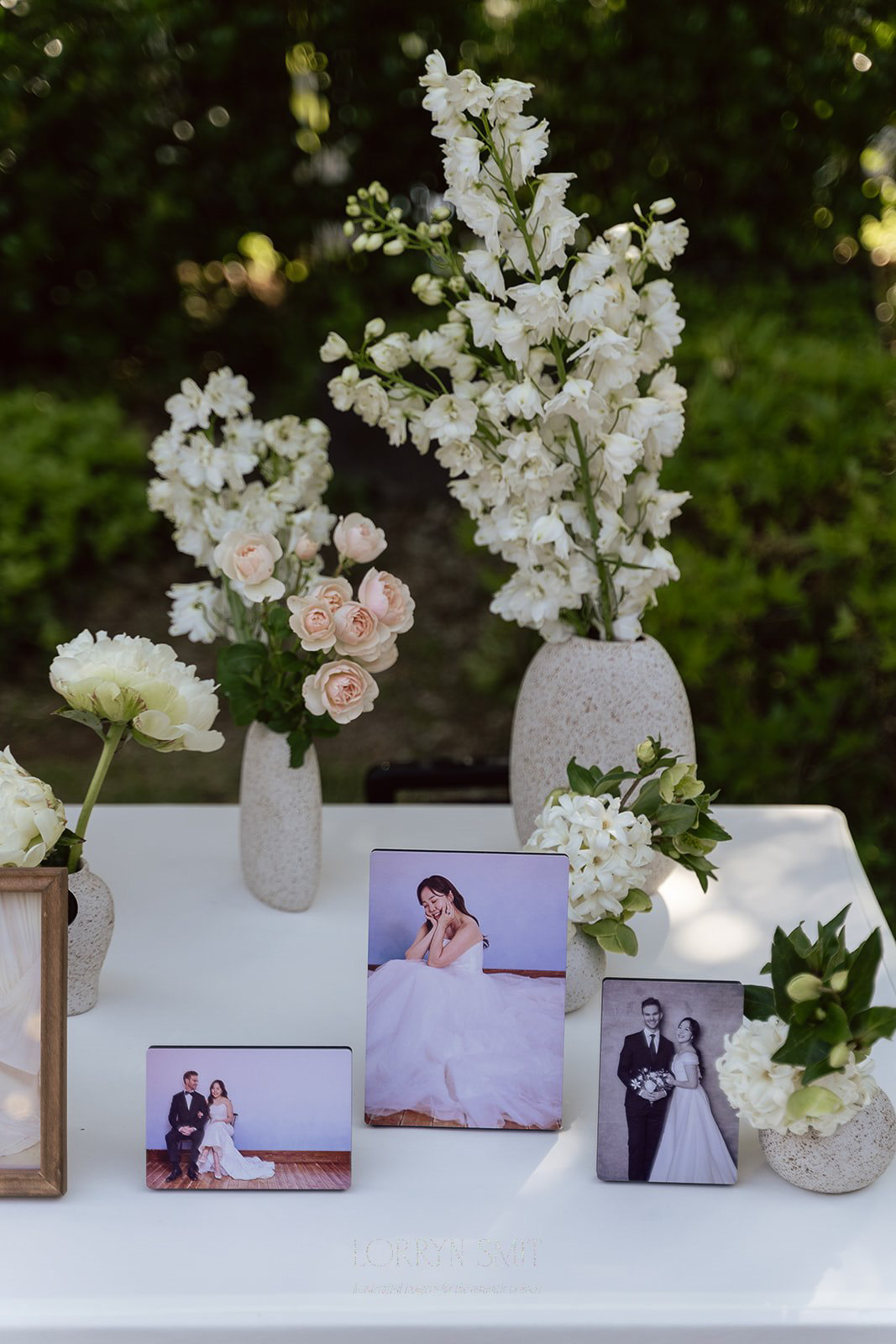
Similar to engagement photos, a pre-wedding photoshoot is a way to document beautiful portraits before the wedding day. I often see it as an opportunity to create art, as you have more time, more intention, and more freedom with things like location, styling, and wardrobe. You can then share these images with guests, display them in your home, or even incorporate them into your wedding day itself.
To dive deeper into what this can look like, you can also explore my full guide on what to expect from a pre-wedding photoshoot in Korea, and how it can be beautifully woven into your other wedding traditions.
Sinbudaegisil (신부대기실)
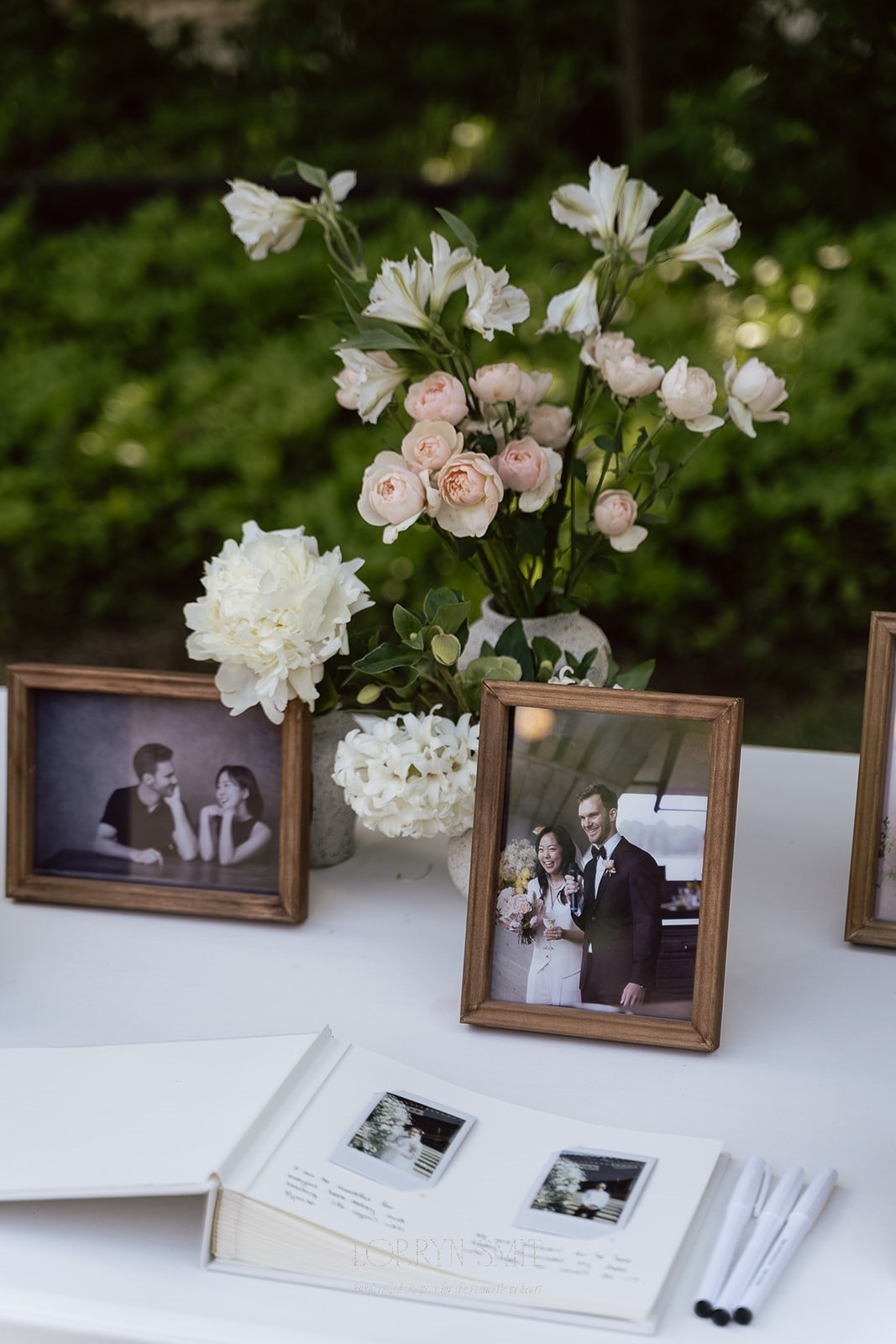
A sinbudaegisil, which translates to “bridal waiting room,” is another traditional element you may come across in Korean weddings. Before the ceremony begins, a designated bridal space is set up, often styled in white or decorated with flowers that match the overall aesthetic of the day. Guests arrive early to visit the bride, share greetings, and take photos.
That said, this tradition is becoming less common in its original form. I personally tend to encourage more modern interpretations that encourage natural interaction. I love it when couples reimagine it into something like a portrait-style photo booth instead. This keeps the essence of gathering and connection, while also better aligning it with the spirit of weddings today.
Giving Gifts
Gift-giving is an important part of Korean wedding culture. It’s common for guests, especially close friends of the parents, to give monetary gifts to the couple as a gesture of support and blessing.
Another traditional element you may see is the groom presenting a wooden goose to the bride’s mother. Geese mate for life, so this gift symbolizes lifelong commitment and fidelity. In many ceremonies, it is presented as the groom walks down the aisle with his best man, adding a quiet layer of meaning to the processional.
Samulnori
If you’re looking to bring a sense of energy and movement into your ceremony, Samulnori is an exciting addition. Before the ceremony begins, you can welcome guests with a lively traditional performance featuring four musicians in colorful costumes, dancing and playing instruments with long ribbon-adorned hats.
Each instrument represents a natural element—thunder (kkwaenggwari), wind (jing), rain (janggu), and clouds (buk)—coming together to create a symbolic and rhythmic opening to the day. It’s joyful, expressive, and a very memorable way to set the tone before the ceremony begins.
The Joining of Two Families
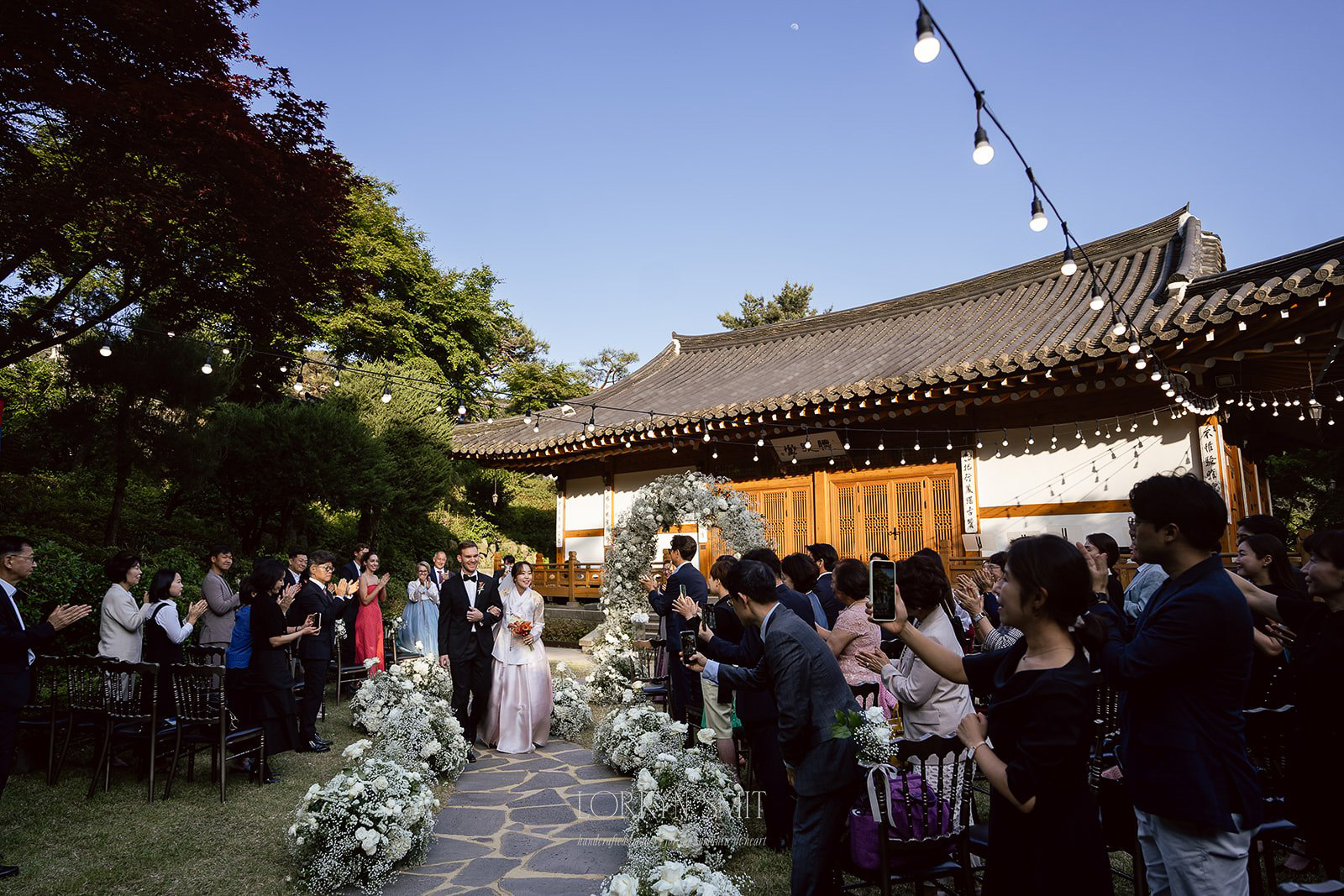
To symbolize the union of two families, the mothers of the couple often walk down the aisle together. They may also light candles, blend sand, or water a shared plant—simple, symbolic acts that reflect two families becoming one.
Deep Bows
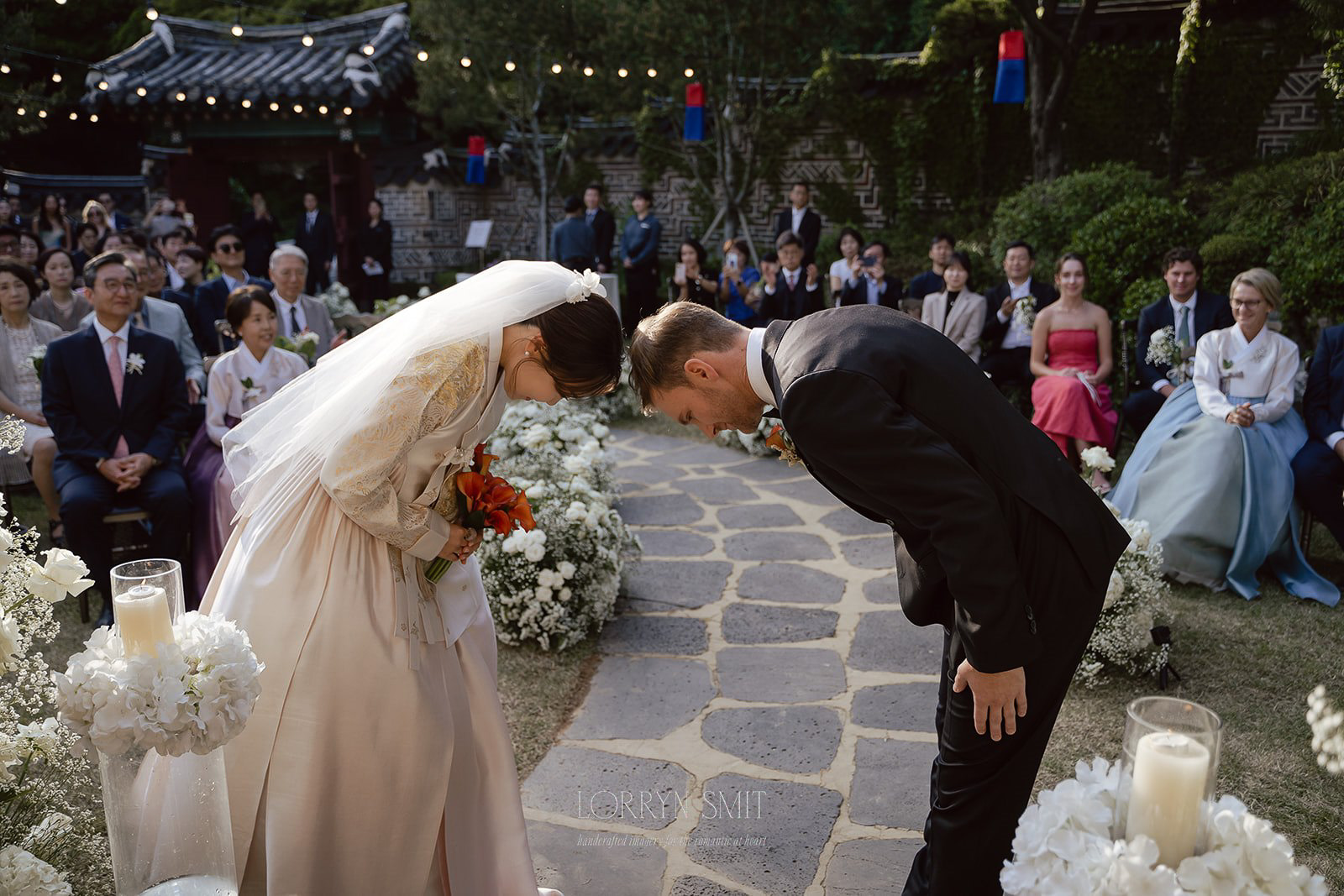
Bowing is another deeply purposeful gesture throughout the wedding day. Parents often bow to guests before the ceremony begins and again at the end as a sign of gratitude and respect. The couple also bows to their parents after the declaration of marriage, which marks the tender transition into adulthood and a new family role.
Paebaek Ceremony
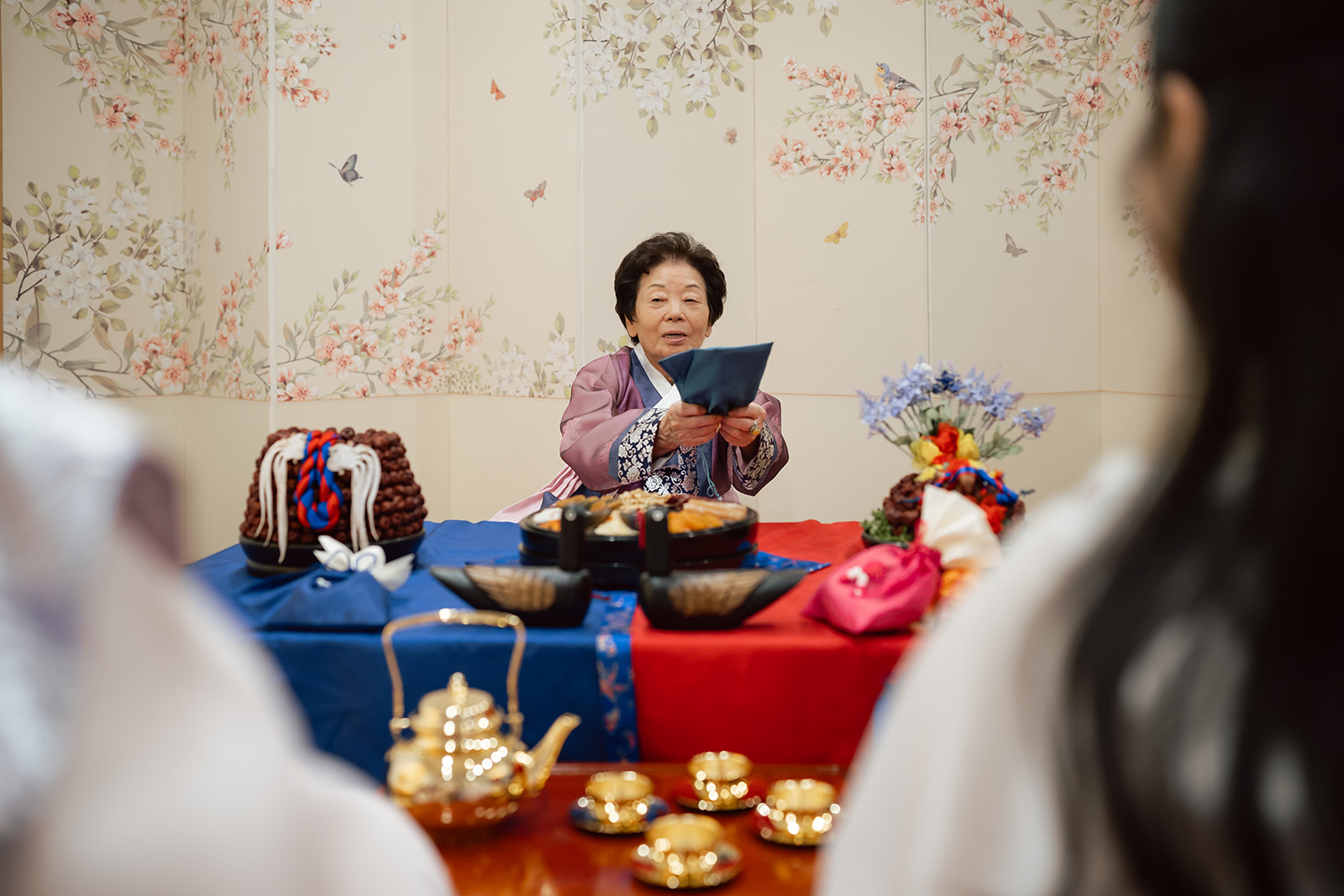
The Paebaek ceremony is a Korean wedding tradition that honors the couple’s commitment to their families. It typically takes place after the ceremony but before the reception.
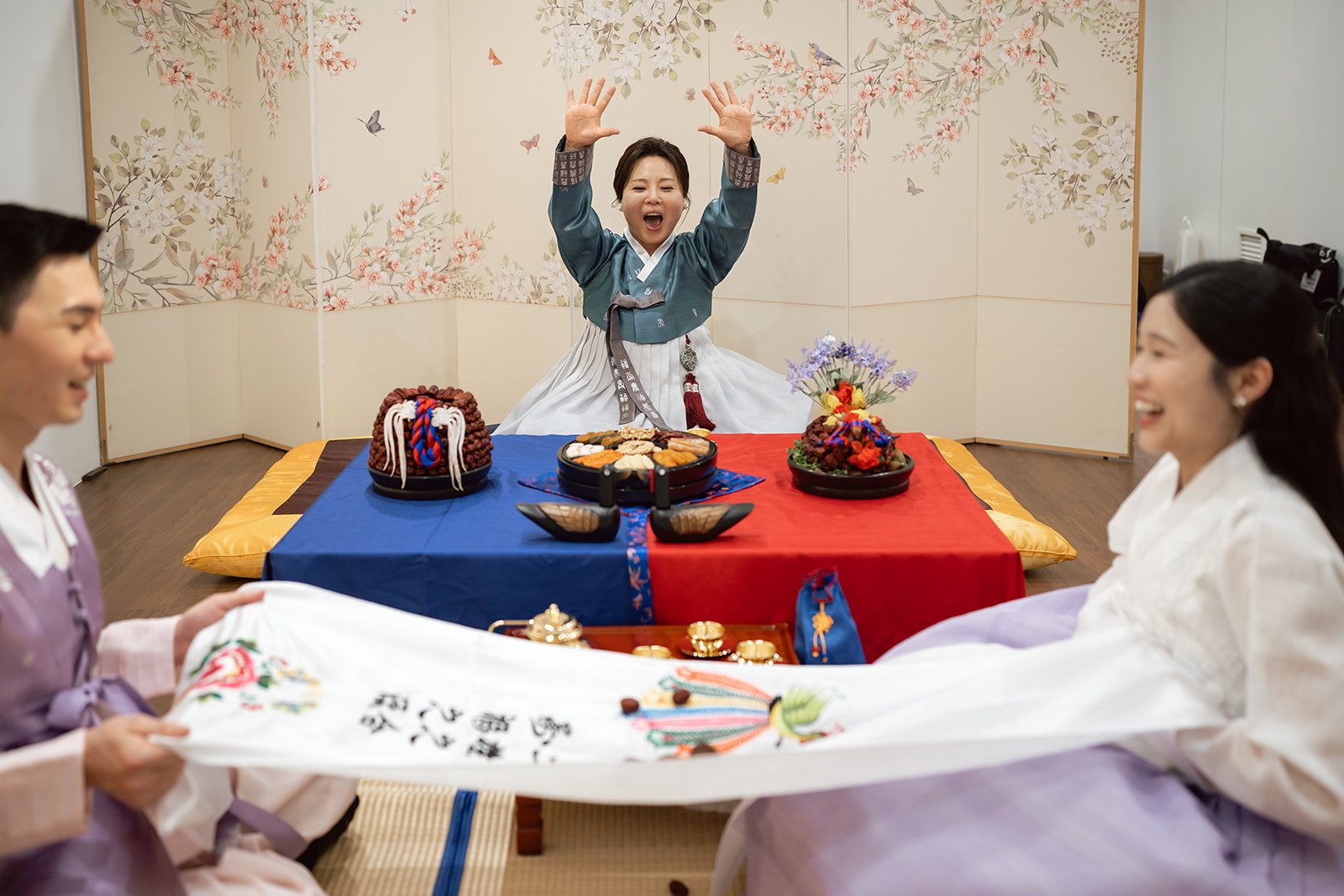
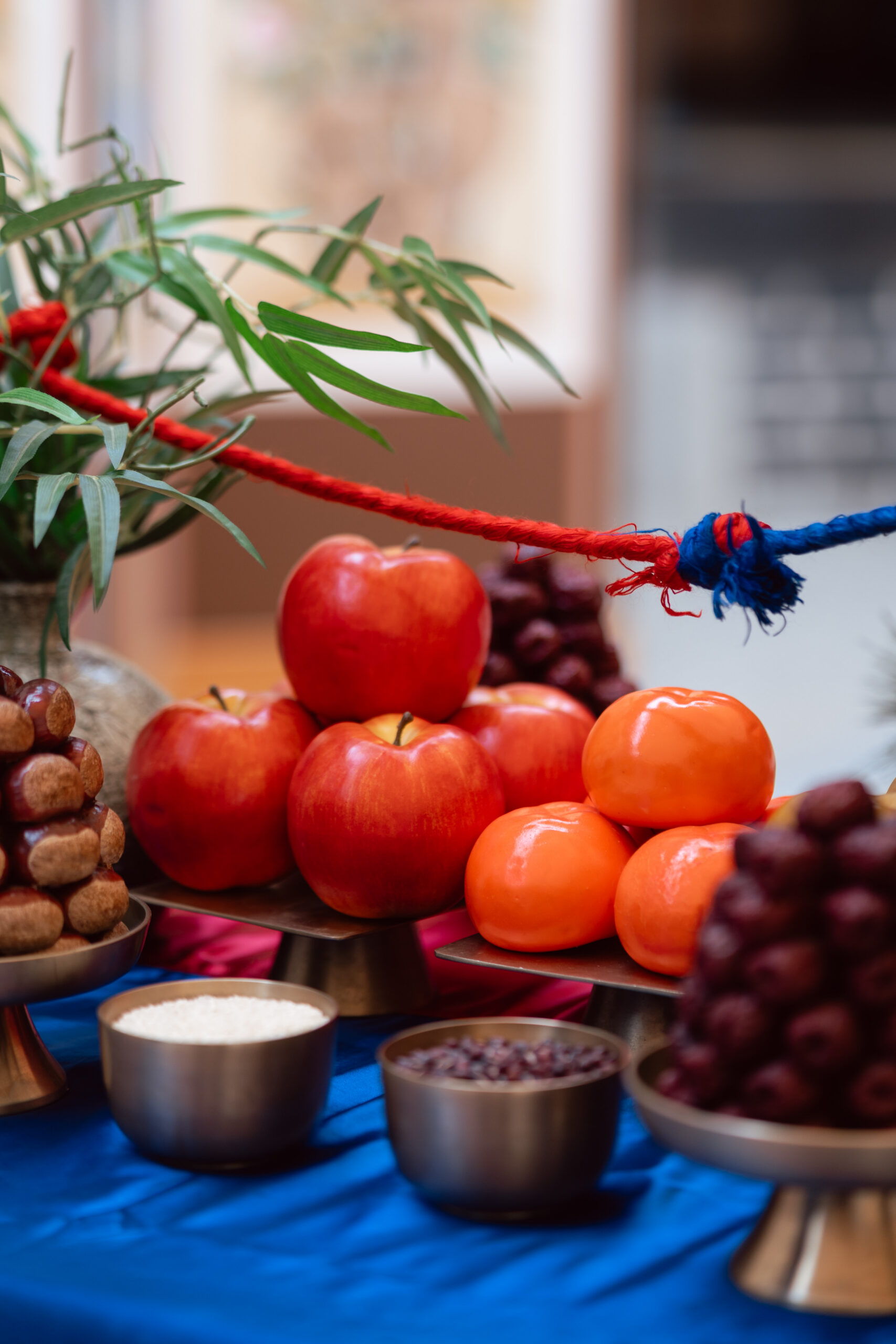
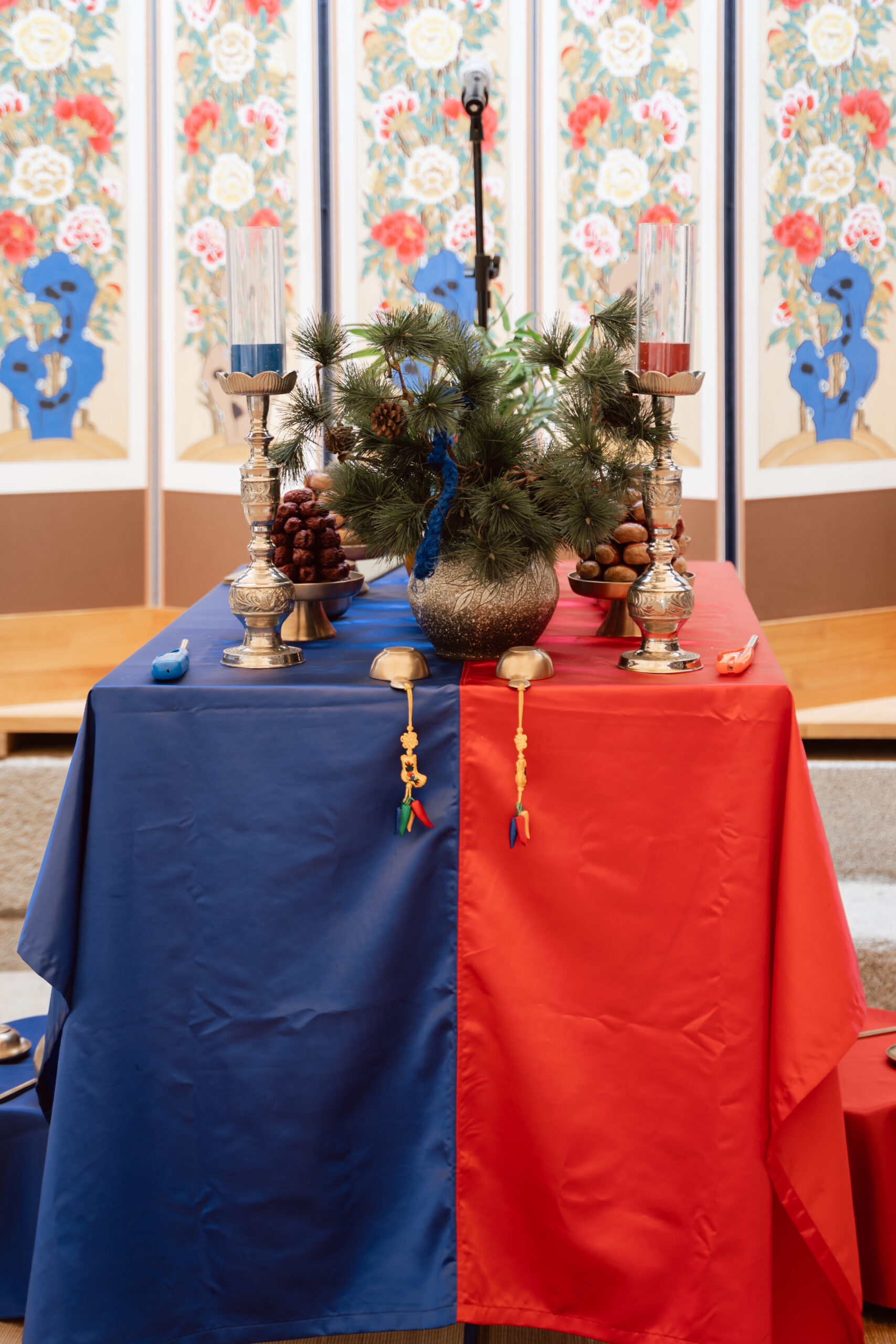
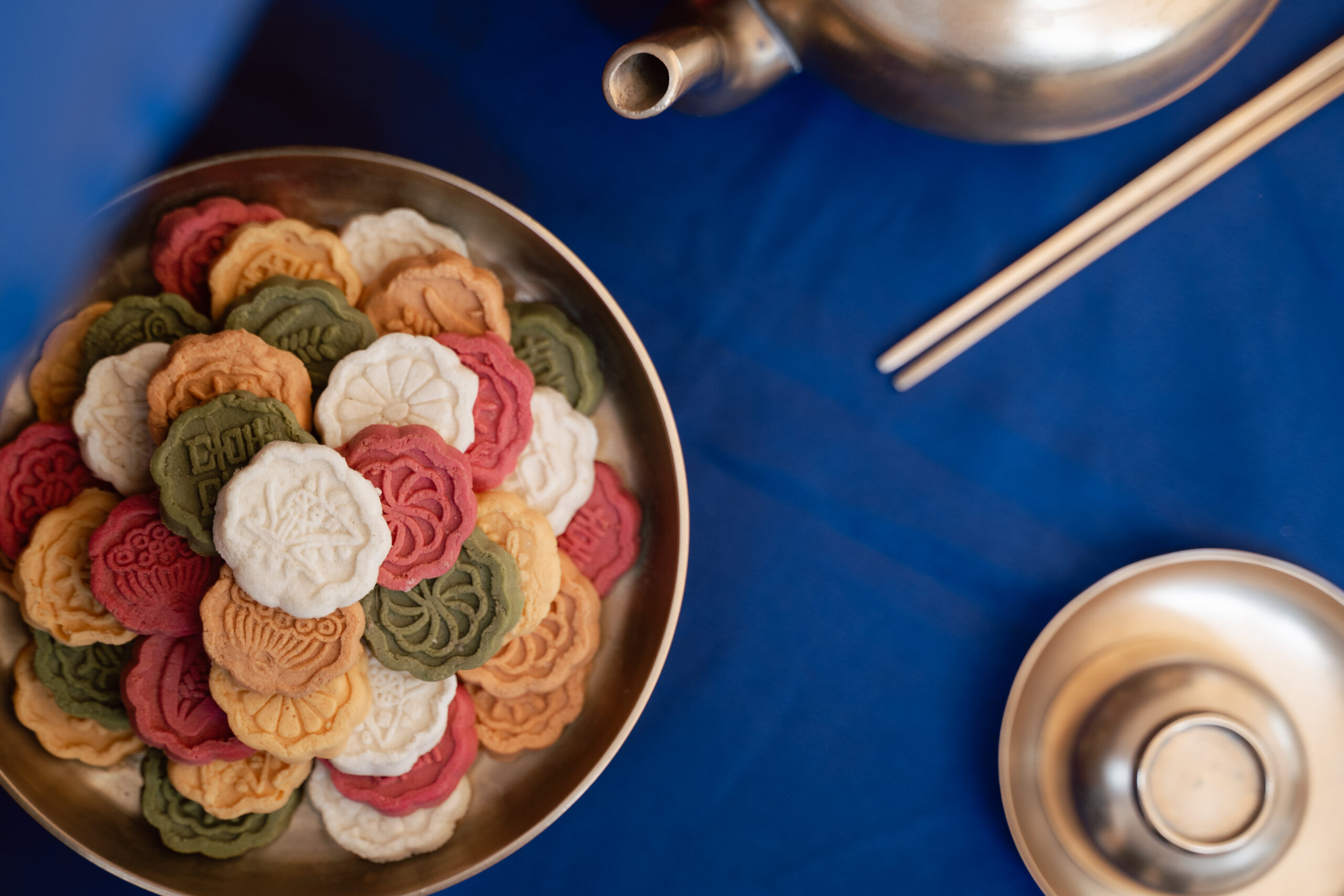
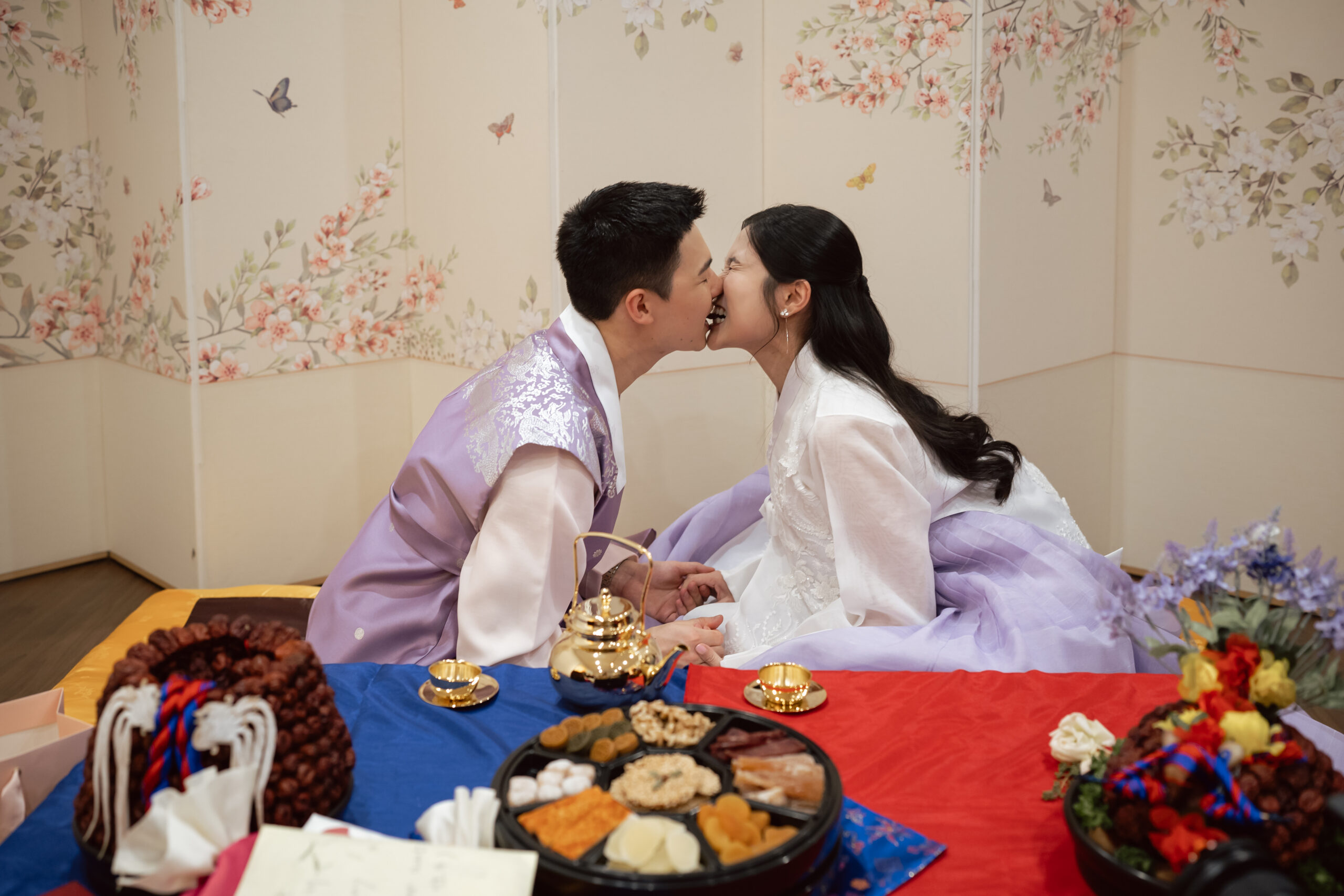
The couple changes into Hanbok and gathers with close family in a traditional hanok-style room. The ceremony begins by honoring the parents through deep bows. What follows are tea or alcohol offerings, often paired with a toast and shared words of wisdom in return. Jujubes (Korean dates) and chestnuts—symbolizing daughters and sons—are then tossed toward the couple as they hold a cloth, with the number caught traditionally representing future children.
The couple then greets grandparents, aunts, uncles, and sometimes siblings, offering bows and tea while receiving advice and cash gifts. The ceremony ends with a final, intimate exchange between the newlyweds.
Traditionally, Paebaek only included the groom’s family. However, modern ceremonies often include both sides, transforming it into a shared experience that celebrates the joining of two families.
Korean Wedding Attire & Makeup Traditions
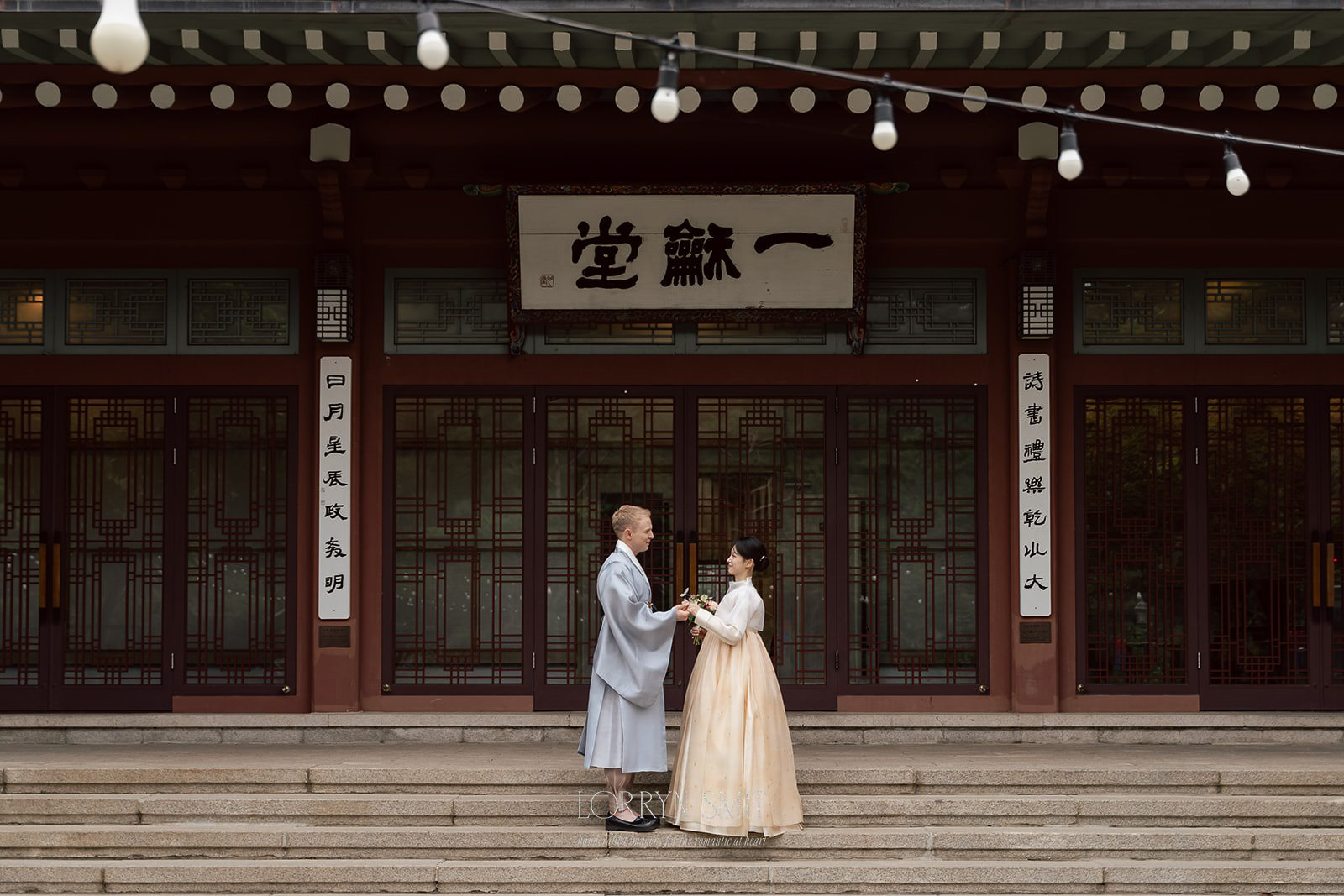
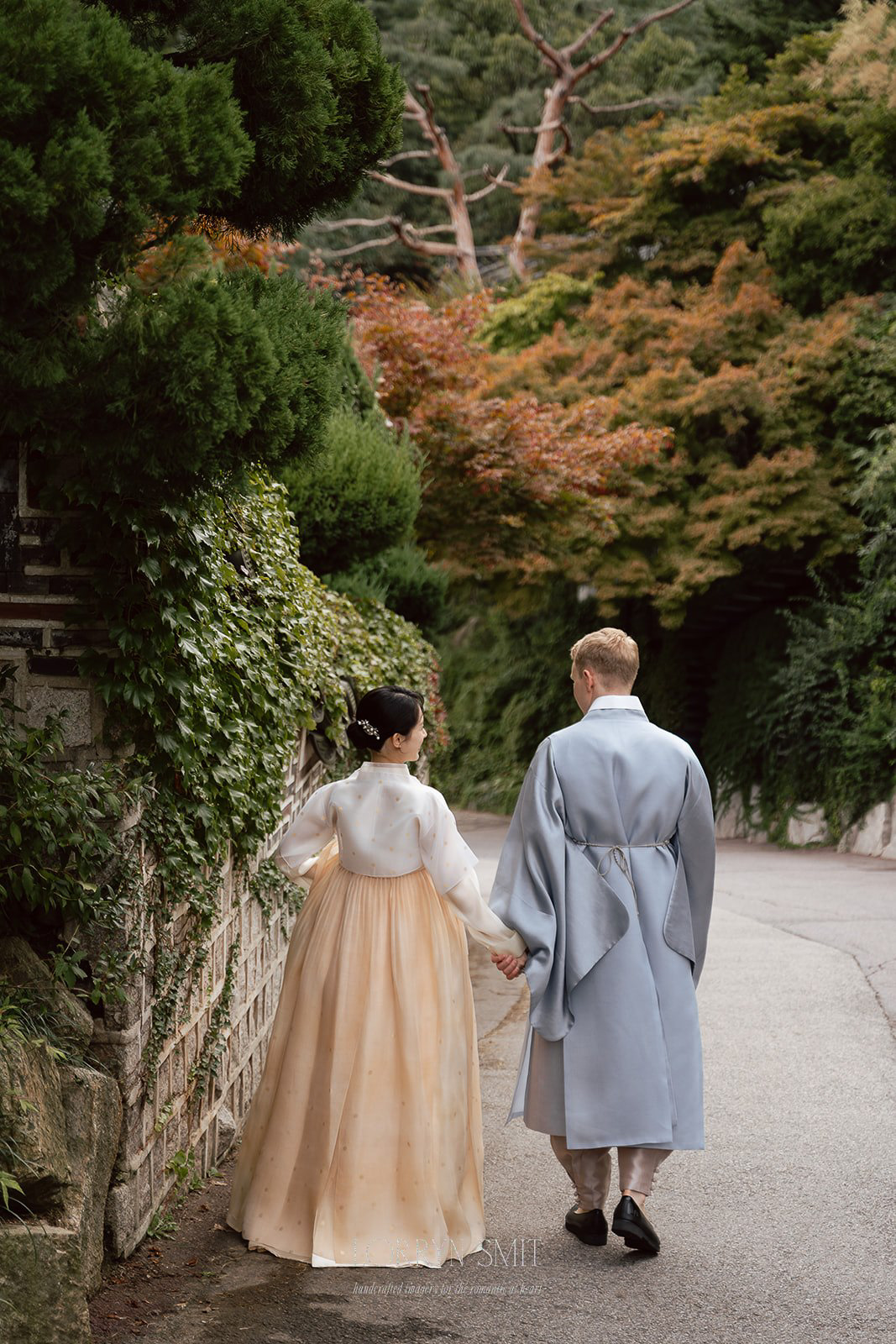
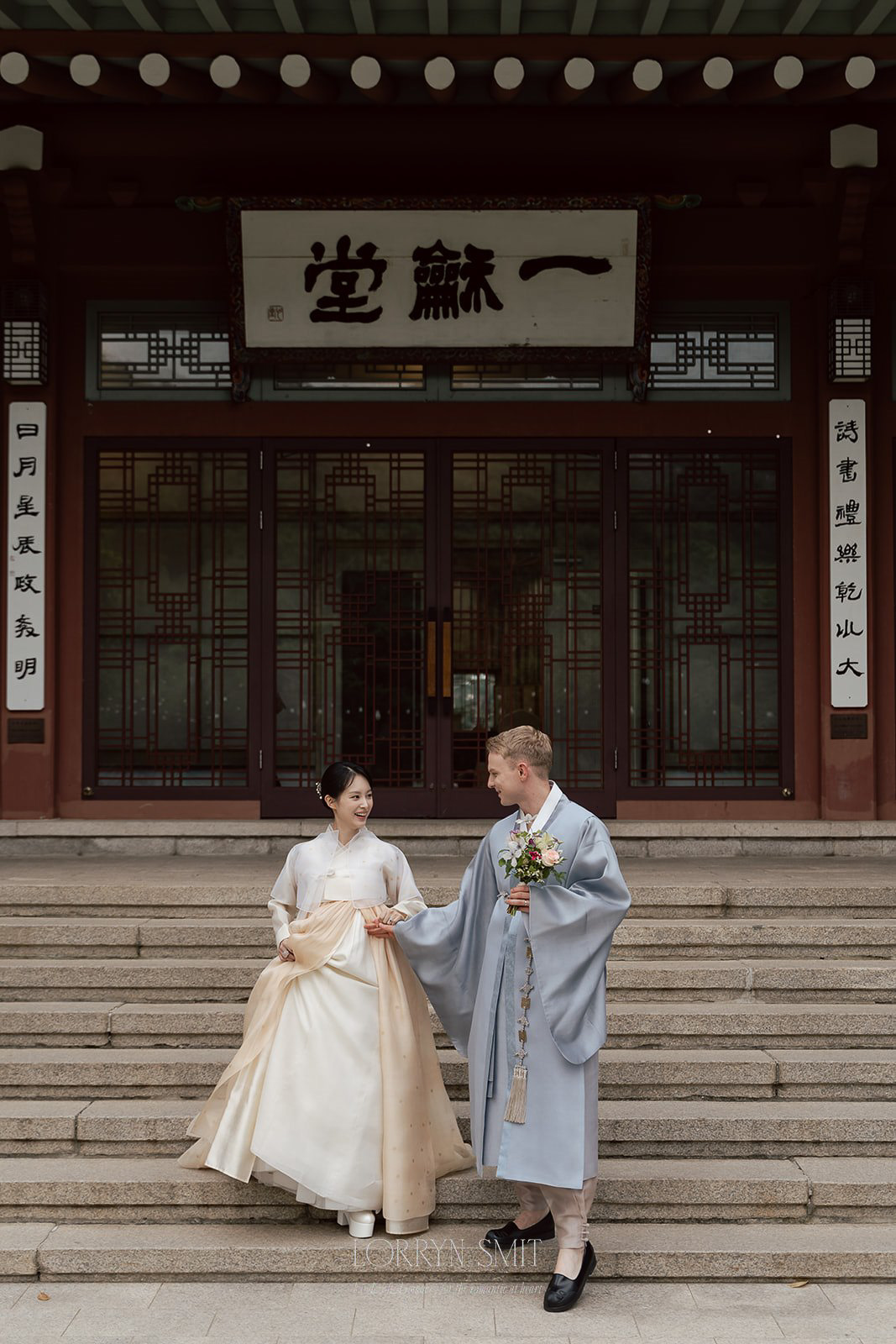
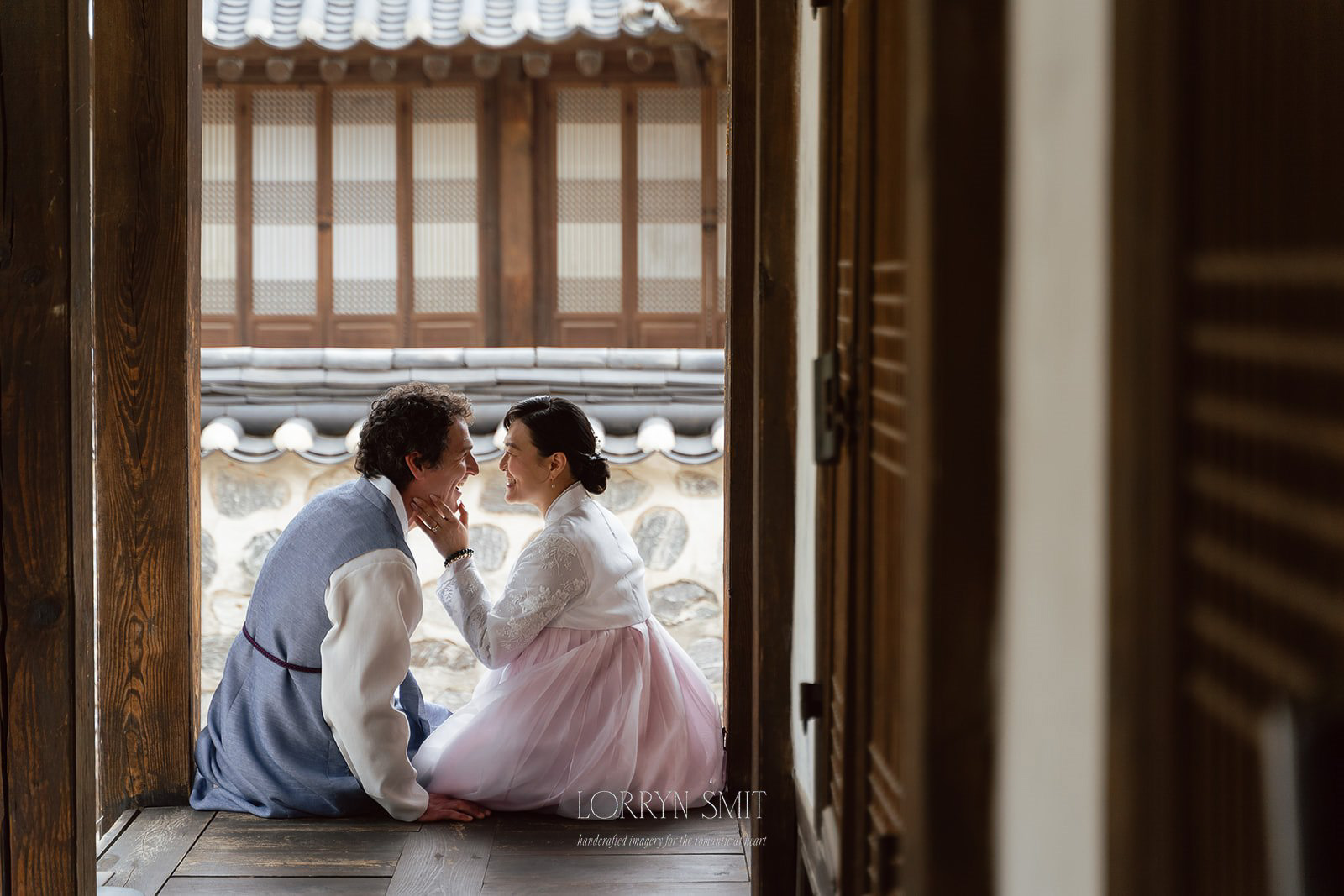
The traditional Korean outfit, known as Hanbok, is worn by both men and women for weddings and occasions like the Paebaek ceremony. Hanboks are often designed in vibrant colors, each carrying its own cultural meaning and sense of intention.
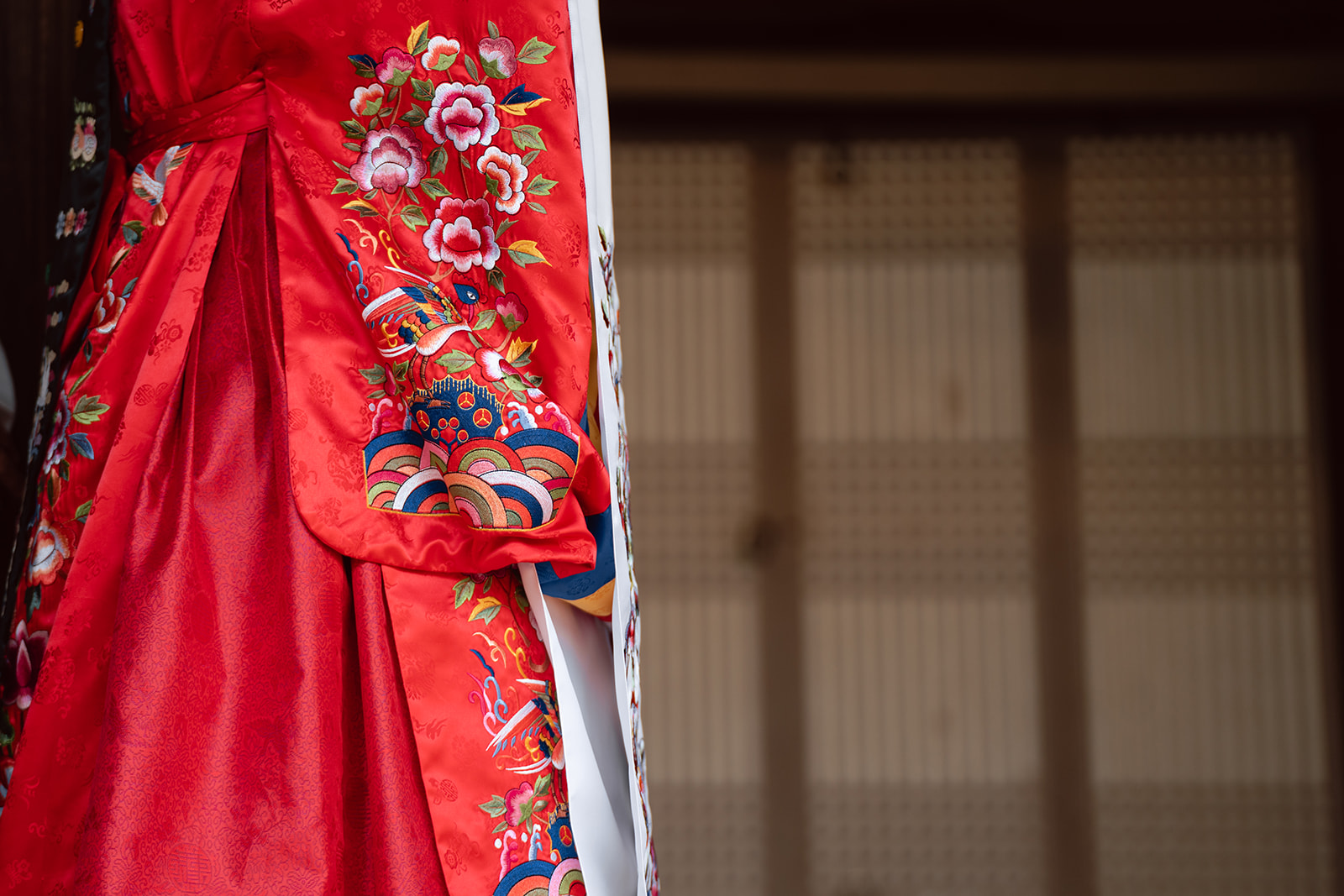
For brides, red is most commonly worn, symbolizing good fortune and blessings for the marriage ahead. A bridal Hanbok includes many layered pieces, such as the jeogori (jacket), chima (skirt), and jeonbok (overcoat). It is often finished with delicate accessories such as a norigae (ornamental pendant) and a jokduri (a traditional bridal crown), adding softness and detail to the overall look.
Grooms typically wear blue Hanbok, which represents steadiness, integrity, and a grounded presence. Their outfit also includes a jeogori, baji (pants), and durumagi (robe). Together, the red and blue reflect balance—yin and yang—honoring the harmony between two individuals coming together.
How to Include Korean Wedding Traditions in a Modern Wedding
Including Full vs. Partial Rituals
When it comes to weaving Korean wedding traditions into your day, there’s no single “correct” way to integrate them. If a more traditional approach calls to you, that’s beautiful. And if your vision leans elsewhere, that’s equally valid. Many couples land somewhere in between—a mix of honoring certain rituals while gently reshaping others to feel more like themselves.
In that same spirit, you don’t have to include everything for it to feel complete. Sometimes it’s the smallest details, like choosing a hanbok in your favorite color, that carry the most weight. You have control over what stays close, what evolves, and what simply doesn’t need to come with you.
Blending Cultures
When your wedding in Korea brings together two different cultures, there’s something tender about how traditions begin to overlap and find new meaning together. It’s less about choosing one side over the other and more about making space for both to feel seen in your day.
I remember documenting a wedding between a Korean and Chinese couple, where it was especially important for the Chinese partner to include a traditional tea ceremony. Even though they were getting married in Korea, they chose to incorporate that ritual in place of a Paebaek. They also held it outdoors so their guests—many of whom had flown in from overseas—could be part of it in a more open, shared way. It felt thoughtful, inclusive, and deeply personal in the most unforced way.
At the end of the day, whatever feels symbolic to you deserves space in your celebration.
Making Wedding Traditions Feel Intentional
When you choose to include Korean wedding traditions in your ceremony, the most important thing is that they feel honest to you. Not included because they “should” be, but because they genuinely resonate in some deeper, quieter way.
It can be helpful to pause with each tradition and consider what it represents beyond the surface. Whether it feels grounded, connected to your story, or meaningful within the context of your family, there’s a sense of clarity when something truly belongs.
When that alignment is there, it feels steady and unmistakable. And that’s what lingers long after the day is over. It’s the intentional choices that felt like they truly belonged to you, like during Dan and Andrea’s wedding that included a Korean tea ceremony.
How You Can Incorporate Korean Wedding Traditions to Fit Your Vision
In Korea, wedding traditions tend to unfold in quiet, intentional layers throughout the day. Before the ceremony, moments like a bridal waiting space or a Samulnori performance can set a sense of anticipation and energy. During the ceremony, meaningful gestures like the gifting of wooden geese, deep bows, and rituals that symbolize the joining of two families bring a sense of depth and presence. Afterward, many couples choose to hold a Paebaek, shifting into a more intimate, family-centered experience.
Still, even with centuries of meaning behind them, these traditions aren’t fixed. There’s always an openness to reimagine them in a way that feels more aligned with your aesthetic while still honoring their roots. If you’re including a Paebaek ceremony, you can incorporate design elements and styling choices that feel more elevated and refined, while still respecting the tradition itself. Or, if you’re having pre-wedding photos taken, you can display them gallery-style throughout your wedding space, as Soeun and Sungjoon did at their wedding at Aube Studio.
You also get to decide what feels private and what you want to share. For example, a Paebaek is traditionally reserved for close family, but some couples choose to open that moment up in a way that allows guests to witness or feel connected to it. At the end of the day, how you express these traditions and share them is entirely your own.
Common Mistakes to Avoid When Including Korean Traditions
When choosing to incorporate Korean traditions into your wedding, there are a few common pitfalls to be mindful of.
Before deciding which rituals to include, it’s important to understand the full meaning behind each one. This not only offers cultural context but also ensures the tradition feels genuinely meaningful to you on a deeper level.
Another important consideration is timing. Some traditions naturally take more time and presence than others, so it’s worth building that space into your wedding day timeline. This allows you to experience each moment fully, without feeling rushed through something that’s meant to be thoughtful and slow.
Finally, if a tradition involves your guests, it helps to prepare them in advance. A little context goes a long way in allowing people to feel present, engaged, and able to understand the significance of what they’re witnessing or participating in.
Do You Need a Planner or Photographer Familiar with Korean Traditions?
Working with a planner and photographer in Korea who understands wedding traditions can make a significant difference in how your day unfolds. Not only can they help make sure that each ritual is carried out with care and respect, but they also act as a gentle bridge between cultures, helping everything feel more connected and cohesive.
The right team doesn’t just support logistics. They help hold the experience in a way that feels smooth, intentional, and emotionally grounded from start to finish.
As someone who has lived in Korea for a decade, I genuinely see this place as my home. With that comes a deep understanding of both the beauty and the challenges of planning a wedding here—especially for couples navigating it from abroad. Many of the couples I work with are expats themselves, coming “home” to Korea to get married, and there’s a shared understanding in that experience that I really value.
If you’d like to learn more about getting married in Korea, you can also read my full guide on the process.
Frequently Asked Questions About Korean Wedding Traditions
How long does a traditional ceremony take?
In Korea, a wedding ceremony typically lasts around 25 minutes. That said, this isn’t a fixed rule, and you’re not obligated to fit your day into a strict timeframe. You can shape your ceremony to feel as spacious or as concise as you need it to be.
Do guests participate or just observe in Korean Wedding Traditions?
This depends entirely on which traditions you choose to include and how you structure them. Some rituals, like Samulnori, are typically observed as a performance. Others, like a bridal waiting area, invite more interaction with guests. Even traditionally private moments, such as a Paebaek, can be reimagined in a more open setting if you want guests to feel included in that experience.
Can you perform traditions outside of Korea?
Yes, you can absolutely incorporate Korean wedding traditions outside of Korea. If a ritual feels important to you, you can include it in your wedding, wherever it takes place. Whether that’s wearing Hanbok during part of your day or including symbolic elements like wooden geese, these traditions can travel with you.
How can I incorporate Korean customs in a multicultural wedding?
In a multicultural celebration, there’s a lot of space for creativity and intention. You might choose to wear Hanbok for a portion of your day. Or potentially incorporate quieter gestures like deep bows that hold cultural meaning without overwhelming the flow of the wedding. It’s about thoughtfully weaving together the traditions that matter to you, alongside those from other cultures you’re honoring, in a way that feels balanced and true to your story.
In Korea, there’s no single right way to incorporate wedding traditions. What matters most is the intention behind what you choose to include. When a tradition holds real meaning for you, that will always shine through in a way that feels deeply felt, both on the day itself and long after.
If you’re looking for a culturally fluent photographer to help guide you through these traditions and document them with care, I’d love to connect. It would be my honor to help you weave deep meaning into the day.